What the SDVOSB Set-Aside Actually Does (and Doesn’t) Do
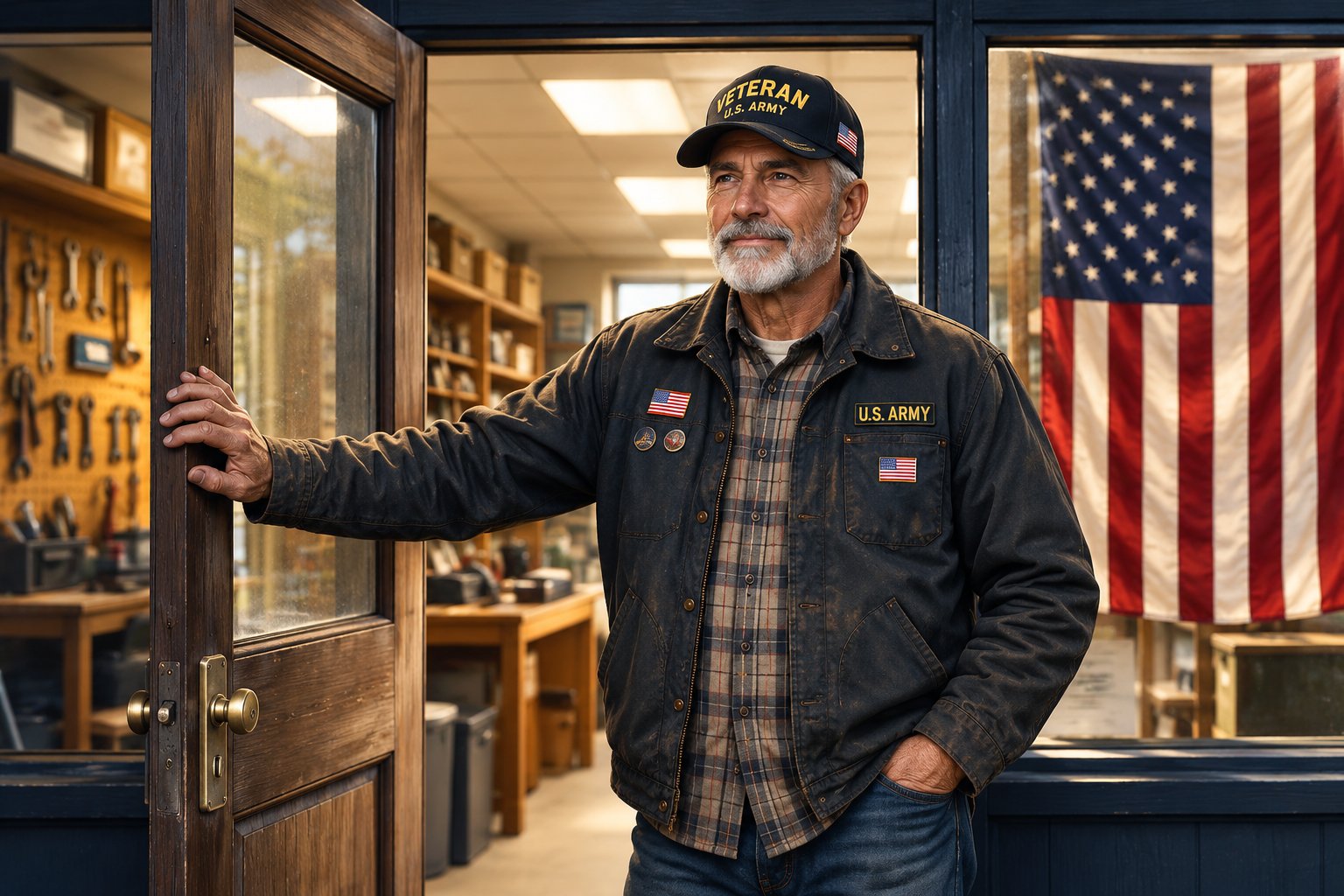
Before anything else, a thank-you. This week we honored Veterans Day, and we’re grateful to the veterans in this community, especially the service-disabled veterans who went on to build businesses after their service ended.
Now for the question this piece is really about.
Few phrases in federal contracting carry as much weight as “SDVOSB set-aside.” Some people hear it and picture a golden ticket. Some veteran-owned firms get certified and are surprised when contracts don’t simply arrive. Some non-veteran contractors assume the whole category is a closed door.
All three reactions are partly right and partly wrong. Here’s what the set-aside does, what it doesn’t, and what it means whether or not you’re a veteran.
What SDVOSB Actually Means
SDVOSB stands for Service-Disabled Veteran-Owned Small Business. In plain terms, it’s a small business that is at least 51% owned, directly and unconditionally, by one or more service-disabled veterans, who also control it day to day and over the long term.
“Owned and controlled” does real work in that sentence. Being a veteran isn’t the same as meeting the definition, and neither is working for a veteran-run company. The status has to be documented.
Certification runs through the Small Business Administration (SBA)’s Veteran Small Business Certification program, known as VetCert, which took over from the Department of Veterans Affairs. Applicants typically submit records like a DD-214, a VA or Department of Defense disability letter, company formation documents, and financials, and the business must meet the SBA size standard for its primary NAICS code in SAM.gov. Certification is valid for three years and renewed through the portal, and material changes to the business need to be reported.
The process has also been moving. In its November 9 announcement, SBA said it cleared a backlog of more than 2,700 pending VetCert applications and approved over 18,000 contracting certifications for veteran-owned small businesses in FY26. For a business that’s been waiting on certification, that’s worth knowing.
A set-aside is a procurement restricted to businesses that qualify. That’s what makes it valuable, and it’s why the rules around it are strict.
What SBA Set for FY27
Here’s the news behind this week’s announcement. Each year, SBA works with federal agencies to set contracting goals for different categories of small business. According to SBA, the FY27 goals for both prime contracts and subcontracts are:
Veteran-owned and service-disabled veteran-owned small businesses (combined): 10%, up from 5%
Small disadvantaged businesses: 5%
Women-owned small businesses: 5%
HUBZone businesses: 3%
SBA also reports that the government exceeded the previous 5% SDVOSB goal in FY25, with $32.5 billion in prime contracts awarded to SDVOSBs. For context, SBA notes that the overall statutory target is for at least 23% of federal prime contracting dollars to go to small businesses, a target it says has been exceeded for eleven consecutive years.
A word on what a goal is. It’s a target agencies are measured against, not a quota on any single solicitation. It doesn’t guarantee a set-aside will appear in your NAICS code. It’s a tailwind, not a contract.
Two details are worth noticing. First, the veteran-owned category is the highest of the four, which signals how much weight agencies are being asked to give it. Second, the goal covers subcontracting as well as prime contracts, a point we’ll come back to for non-veteran contractors below.
What the Set-Aside Actually Does for You
The advantages are real, so let’s name them.
The biggest is a smaller field. Instead of competing against every small business in your NAICS code, you’re competing against other qualifying firms. For a small contractor, that can change your odds meaningfully.
There’s also institutional support. Federal agencies have government-wide goals for how much contract spending goes to small businesses, and service-disabled veteran-owned firms are one of the categories those goals cover. The Department of Veterans Affairs in particular has a long history of prioritizing veteran-owned firms.
In some situations, contracting officers can also award directly to a qualifying firm without a full competition, up to a ceiling in the single-digit millions that varies by agency and by whether the work is manufacturing or services. That can shorten the path from opportunity to award.
But notice the wording: the status opens doors. It doesn’t walk you through them.
What It Doesn’t Do
This is the part most articles skip, so let’s be direct.
It doesn’t win the work for you. A smaller field still has competitors in it. You still need a strong proposal, competitive pricing, and past performance that gives the evaluator confidence. Plenty of certified firms lose set-asides to other certified firms.
It doesn’t guarantee a steady supply of opportunities. Not every agency uses the set-aside equally, and some NAICS codes see regular SDVOSB set-asides while others see almost none. The only way to know is to look at what agencies in your space have actually set aside.
It doesn’t solve capacity. A contract still has to be performed, and that takes people, equipment, insurance, and cash flow. A set-aside can win you a contract you aren’t ready to staff.
It doesn’t let you hand the work to someone else. On a services set-aside, the prime generally has to keep roughly half the work for itself or for other qualifying firms.
It isn’t permanent without effort. Certification takes documentation and renewal, so keeping your records current isn’t optional.
For Non-Veteran Contractors: Reading the Set-Aside Honestly
If you’re not a service-disabled veteran, an SDVOSB set-aside isn’t open to you as a prime. That’s worth accepting plainly. The set-aside exists to give a specific group of business owners a real opportunity, and it can’t do that if everyone competes for it.
But it isn’t a closed door for you either. SDVOSB primes often need partners with capacity, equipment, or capabilities they don’t have in-house.
Here’s the detail that matters most for teaming. The prime doesn’t have to perform its required share entirely alone. Work done by similarly situated firms, meaning other qualifying SDVOSBs, can count toward it. A non-SDVOSB partner generally doesn’t count. So your role as a teammate lives in the portion of the work the prime is allowed to subcontract, and that portion has a ceiling. The partner worth bringing in is one who fills a defined gap, not one who wants a bigger piece than the rules allow.
The lesson from our earlier piece on getting laughed out of a large company’s office applies here too: what’s in it for them? A prime will take your call if you can answer that clearly. What capability are you bringing that they lack? What risk are you removing?
The Integrity Question
One more topic, handled carefully, because it matters.
The set-aside only works if the system stays honest. Acting as a pass-through, where a qualifying firm holds the contract on paper while a company that doesn’t qualify does most of the real work, violates the program rules, and the consequences can be serious.
We’re not suggesting most partnerships look like this. Most don’t. But whether you’re the prime or the partner, the structure of the arrangement matters as much as the label on the contract. If the work split wouldn’t hold up under review, fix it before it ever comes to that.
How to Use It Strategically
If you’re an SDVOSB, treat certification as the entry ticket, not the finish line. The firms that win consistently pair the status with strong past performance, sharp pricing, and an honest plan for who will do the work.
Look at where set-asides actually appear. Search what agencies in your NAICS code have set aside in recent years. Theory tells you what’s possible. Award data tells you what’s happening.
Build teaming relationships before you need them. The best arrangements are formed well before a solicitation drops. Showing up with a defined role and a clear answer to “why you?” beats scrambling during a response window.
If you’re not an SDVOSB, research SDVOSB primes in your lane and look for the gap you can fill. Your value is in what you add, not in what you’d like to take.
Keep your documentation current. Ownership records, control documentation, and certification materials should be ready for review at any time.
The Bottom Line
The SDVOSB set-aside exists to give service-disabled veterans a real opportunity in federal contracting. It works best when everyone treats it as an opportunity to perform, not a shortcut around the work.
For veteran owners, it’s a door worth walking through well. For everyone else, understanding how it works makes you a sharper competitor and a more useful partner.
To everyone who served: thank you.